The Mere and valley setting
Diss is a Norfolk market town close to the Suffolk boundary, with the Mere forming a distinctive part of its centre and the Waveney valley shaping the wider area. That setting is useful context, not a diagnosis of any garden. A plot near water does not automatically share another property's drainage or rooting conditions. Previous building work and changes to levels can matter more than a broad description of the town.
Older streets can have enclosed gardens, walls and narrow routes to the rear. Later housing brings different boundaries and room for trees to develop. Roydon, immediately to the west, adds another local context for an enquiry. Explain the actual entrance, neighbouring structures and usable space instead of assuming every garden in the Diss area is an open rural plot.
Keeping a valued tree or changing the space
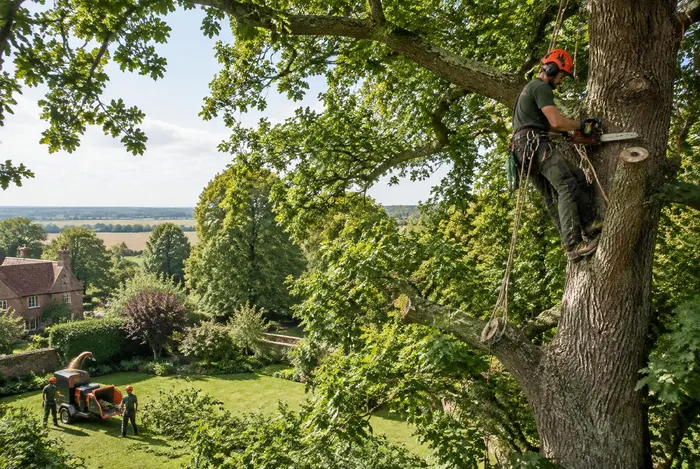
Start with tree surgery when considering crown work, dead branches or removal. The best enquiry describes an objective rather than prescribing a severe cut. Access beneath a branch, clearance from a roof and managing an overall spread each call for different consideration. The species and condition of the tree affect which approach is appropriate.
If a tree stands within a conservation area or has a Tree Preservation Order, statutory checks may be required before work. Ask the local planning authority if the position is uncertain. Wildlife must also be considered, including active nests and possible roost features. Ownership alone does not remove those obligations, and an apparent problem should not be used as a reason to skip them.
Keep the garden usable beyond tree work
A hedge can provide screening without needing the same treatment as a tree. Hedge cutting should distinguish regular trimming from a substantial change in size. Explain where access has narrowed and whether retaining privacy matters. Cutting into bare old growth may have different consequences depending on the hedge species.
For the rest of the plot, garden maintenance is the route for mowing, border care and seasonal tidying. Where a boundary is damaged, fencing allows a separate discussion about posts, boards and gates. Plan the order of these jobs so new structures do not obstruct branch removal or make future upkeep difficult.
Useful details for a Diss enquiry
Photograph the complete tree or hedge as well as the path into the garden. Mention slopes, steps, shared passages and any recent disturbance near roots. Use the quote form to explain what should remain and what material you expect to be removed. This is especially helpful when the garden contains useful established features that a broad clearance request might otherwise overlook.
Clarify whether the work is a single operation or part of wider garden changes. A neighbouring property's tree requires a different ownership conversation from your own. For a separate address nearer the Brandon base, see Thetford; the local page helps orient an enquiry without substituting for the details of the particular site.