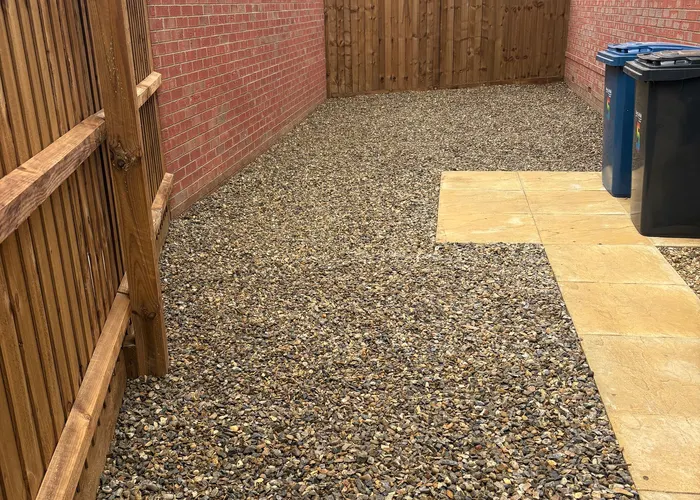
Gravel installation in Suffolk for paths and driveways
We install gravel surfaces across Suffolk and Norfolk from our base in Brandon: garden paths, driveways, parking areas and low-upkeep garden spaces. Every job starts with the ground underneath, because gravel only performs as well as the base it sits on.
Gravel suits gardens and driveways because it drains freely, copes with foot traffic and, on a firm base, can take a car. It also needs no mowing, which makes it a practical choice for awkward or little-used areas.
Gravel work is often combined with other jobs we already do: a new lawn, fencing along the boundary, or clearing the ground first. Quoting it as one job keeps the levels and edges consistent.
Fully insuredProfessional work with responsible site care.
Local coverageAcross Suffolk and Norfolk.
Gravel paths and garden areas
A gravel path is one of the most forgiving surfaces in a garden. It follows curves easily, drains straight through after rain and can be topped up years later without relaying the whole thing. For it to stay looking good, the ground is dug out to a sensible depth, levelled and compacted before any stone goes down.
In garden areas, gravel works well around seating spots, bins and sheds, and anywhere grass struggles. A membrane beneath the stone keeps weeds from pushing up, and a firm edge, whether timber, metal or stone, stops gravel migrating into beds and lawns.
Gravel driveways in Brandon and beyond
A gravel driveway needs more preparation than a garden path because it carries vehicles. The excavation goes deeper, the sub-base is compacted in layers, and the surface stone is chosen to lock together rather than scatter. Done properly, a gravel drive handles daily cars without rutting, and puddles are rare because water drains straight through.
We install gravel driveways in Brandon and across the Suffolk and Norfolk towns we already cover. If an existing drive has sunk or gone thin, it can often be regraded and topped up rather than started from scratch; send photos and Craig will say which applies.
Deeper excavation for vehicle weight
Sub-base compacted in layers
Edging to hold the stone at the sides
Existing drives regraded and topped up where suitable
What happens on the job
The work follows the same order on every gravel installation, whether it is a short path or a full driveway.
Agree the area, levels and where the edges will sit
Excavate and remove the spoil
Lay and compact the sub-base
Fit the weed membrane
Spread and level the gravel to an even depth
Tidy up and remove all waste
Choosing the stone
The two practical decisions are size and shape. Smaller, angular stone locks together and suits driveways and paths that see regular use. Larger or rounded decorative stone looks softer in garden areas but moves more underfoot and under wheels. Colour is a matter of taste, though lighter stone shows less dust and darker stone hides leaf stains.
If you are weighing gravel against a lawn for a front garden, our gravel or turf guide compares the two on upkeep, drainage, parking and looks.
What affects the cost
We quote gravel work from photos or a visit rather than fixed online figures, because the ground decides much of the job. The main factors are the size of the area, how deep the excavation needs to go, access for machinery and materials, the stone chosen, and whether an old surface has to come out first.
Keeping a gravel surface looking good
Gravel is low upkeep rather than no upkeep. An occasional rake keeps the surface even, leaves are best cleared in autumn before they rot into the stone, and a light top up every few years replaces what settles or travels. With the membrane and edging in place from the start, that is usually the whole job.