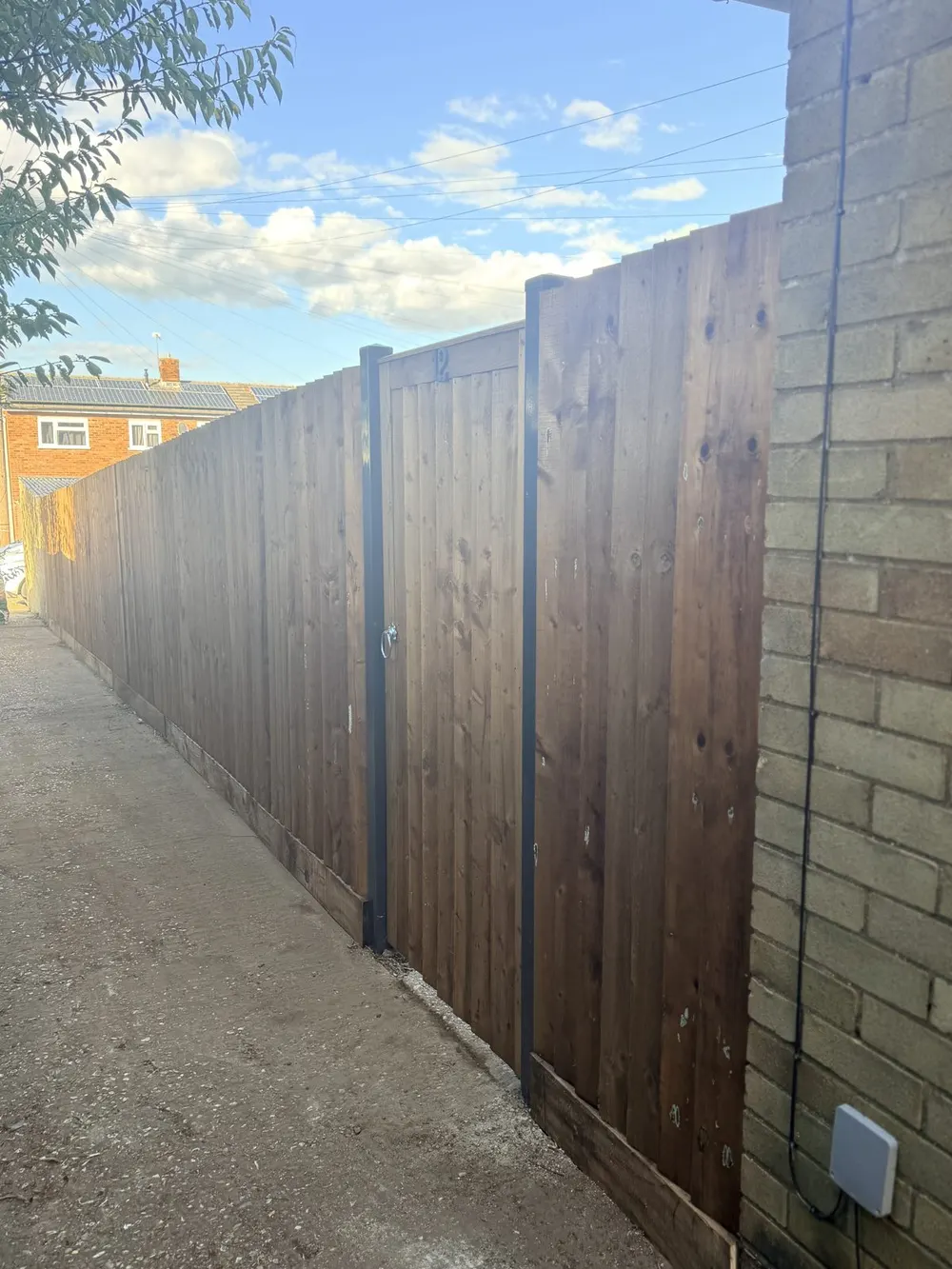
Storm damaged fences
Wind is what brings most fences down, and the damage usually follows the same pattern: posts snapped at ground level where the timber has rotted, panels lifted out of their slots and thrown across the garden, or a whole run leaning where the posts have lost their hold. After a storm, the first job is making things safe, clearing panels off paths and drives and securing anything still moving.
Craig will not promise response times he cannot keep, but storm damage is treated as a priority because an open boundary is a security problem as well as an eyesore. Where the damage spans a boundary with a neighbour, it is worth agreeing who is responsible for the fence before work starts; deeds and convention differ from street to street.
Leaning posts and what causes them
A leaning fence almost always comes back to the posts. Timber posts rot at ground level where wet and air meet, and once the base goes, the post leans and takes the panels with it. Sometimes the posts were never set deep enough, or the ground on one side is wet and soft.
The repair depends on what is left. A sound panel run with one rotten post can often be saved by replacing just that post and refixing the panels. Where every post is going the same way, replacing posts one by one becomes a slow way of buying a new fence, and Craig will say so.
Broken panels and boards
Individual feather edge boards split, warp or come loose, and panel fences lose slats or whole panels to wind and footballs. Replacing a handful of boards or a single panel is a quick job when the framework behind is sound, and matching materials are used so the repair does not stand out.
For close board fencing, repairs are usually straightforward because the fence is built from individual boards, rails and posts: only the damaged parts need changing. The fence replacement cost factors guide explains what drives the cost when more extensive work is needed.
Repair or replace: how the call is made
The honest test is what you are attaching the new bits to. New boards on rotten rails, or new panels between rotten posts, buy you a season at best. Craig checks the posts at ground level, the rails and the general condition of the run, then prices the repair alongside the replacement so you can see the comparison.
A repair makes sense when the structure is broadly sound and the damage is local. Replacement makes sense when most of the run is tired, the posts are failing along the line, or you want to change the style or height anyway. Either way the old material is taken away.
What a repair costs
Fence repairs are priced on the materials needed, the number of posts, panels or boards involved, access along the boundary and how the old material comes out. Small repairs are often a short visit; a storm damaged run is priced after a look at the full length.
Send photos of the damage from a couple of angles plus your location, and Craig will give you an initial view on repair versus replacement before visiting.