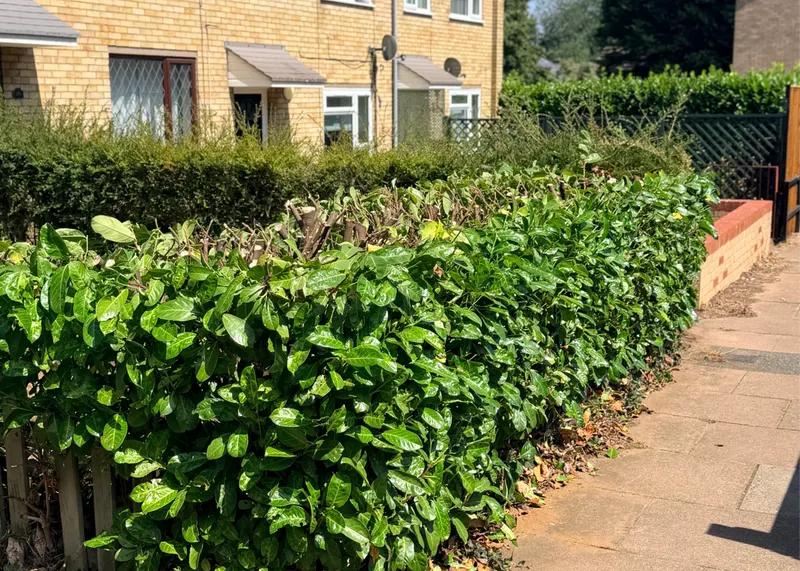
When keeping the hedge no longer makes sense
A hedge can become a problem even when parts of it are still growing strongly. It may have spread into a path, left little room for a lawn, or reached a size that no longer fits the garden. Dead sections and gaps can also make a boundary less useful as screening. Another trim will not necessarily put those things right. Before choosing removal, think about whether you want to keep a living boundary or need the ground itself back.
Removal is also worth considering when fencing or building work needs a clear line. In that case, cutting off the top growth is only part of the job: the stumps underneath still occupy the ground. Tell Craig what will replace the hedge so the quotation covers the appropriate root work. If you would rather retain it, compare the separate hedge reduction service before making a decision.
Cutting down first, digging out afterwards
The hedge is taken down in manageable sections, with the branches gathered rather than allowed to build up across the working strip. The trunks are then cut low. Access and nearby fences or buildings affect how the material is handled, so photographs of both the hedge and the route into the garden help explain the job before a visit.
Where the roots need to go, the digger lifts the stumps and root balls after the growth above ground has been removed. This is different from simply leaving a row of low stumps along the boundary. Machine access and the intended finish need considering together. If the hedge is one part of an overgrown plot, site clearance can cover the wider ground rather than treating the boundary as an isolated task.
Conifer, laurel, privet and mixed hedges
The type of hedge matters most when deciding whether removal is necessary. Laurel and privet can often respond to a harder cut, whereas many conifers will not replace foliage once their sides have been cut into bare brown wood. A mixed hedge needs looking at as a whole because not every plant in the run will respond in the same way.
For a conifer boundary, the conifer hedge removal page explains the particular limits of Leylandii reduction. For other hedges, send a close photograph of the leaves as well as a view of the full run if you do not know the name. The decision should reflect the hedge you have and the space you need, not an assumption that every large hedge must come out.
Nesting birds and the work date
Hedges need checking for active nests before work. Spring and summer deserve particular care, but a calendar date on its own does not show that a hedge is clear. An occupied nest must not be damaged or disturbed by cutting or removal. If birds are nesting in the work area, that work needs to wait rather than proceeding because a date has already been discussed.
Our guide to when hedges can be cut explains the distinction between seasonal advice and the protection of an active nest. Mention anything you have noticed when asking about removal, and do not cut into the hedge yourself to make it easier to inspect.
Decide what the cleared strip is for
Once the hedge and agreed roots are out, the ground can be prepared for a new use. Fencing may provide the boundary without the recurring growth. Turf installation can bring the strip into the lawn, while gravel installation can form a path or another practical surface. Those finishes are separate work to discuss, not something to assume is included in removal.
Planning the next stage before digging helps avoid clearing the wrong area or leaving roots where a fence line needs to go. Explain whether you want only the unwanted hedge removed or a finished replacement surface as well. Green waste is collected and taken away, with the cleared ground left ready for the agreed next stage.
From Brandon across the existing service area
Craig is based in Brandon and works across Suffolk, Norfolk and Cambridgeshire. The areas covered include Brandon, Bury St Edmunds, Thetford, Ipswich, Stowmarket, Newmarket, Norwich, Downham Market and Ely. Give your location along with the photographs so access and the scope of the work can be discussed together. For cost questions, use the existing hedge removal cost guide, then ask for a quotation for your own hedge.