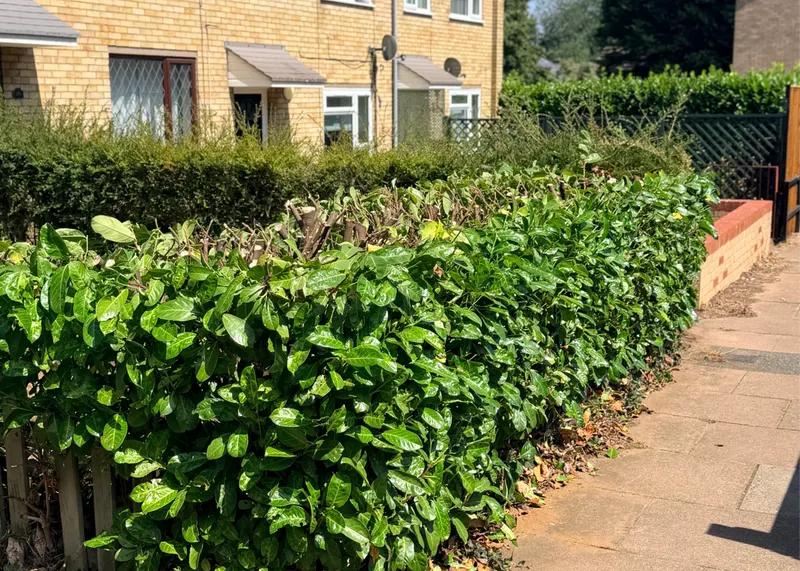
A reduction is not the same as a routine trim
Routine trimming follows the shape already there and removes the latest growth. A reduction changes that shape by taking the top lower, bringing the faces in, or doing both. If a hedge has spread across a path or risen well above the height you can maintain, following its existing outline leaves the original problem in place. This is why a reduction needs a different conversation from booking the usual seasonal cut.
Start with what you need back: access along a path, light into the garden, or a boundary you can keep at a manageable size. Craig can then compare that aim with the growth that remains. The reduce or remove guide helps you weigh up those choices without assuming that hard cutting will suit every hedge.
Agreeing the height and width before cutting
There is no useful universal amount to take off every hedge in one visit. Species, condition and the position of living growth all matter. Lowering the top and narrowing a face are also different decisions: a hedge may tolerate height work but have little green growth left behind its sides. The proposed finish needs to be realistic for that particular boundary.
Very overgrown hedges can benefit from staged work rather than having every face cut hard together. Leaving part of the growth intact while another part recovers can be the more sensible approach. Before agreeing the job, send views of the top and both sides, not just the face you see from the house. Mention any part that is already thin, brown or bare.
Recovery depends on the plant
Many broadleaf hedges, including privet, laurel, beech, hornbeam and hawthorn, can produce new growth after a hard cut. That does not mean the boundary will look full immediately. The first result can be an exposed framework, with foliage returning as the hedge grows. The choice is between accepting that recovery period and keeping a larger green outline.
Conifers need a more cautious assessment. Leylandii does not normally produce fresh shoots from bare brown wood, so narrowing the sides too deeply can leave lasting gaps. Yew behaves differently and can recover from older wood. Where the desired size cannot be reached without losing the usable hedge, hedge removal is an alternative to repeated reductions that never solve the space problem.
Timing the work and checking for nests
Heavy work on broadleaf hedges is often best planned for late autumn or winter rather than treating it as a summer tidy-up. The hedge type still matters, and the appropriate date should be discussed with the extent of the cut. Work on living plants is not improved by choosing a date first and deciding how much to remove afterwards.
Active nests must be protected whenever they are present. The hedge is checked before cutting, with particular care during spring and summer. If nesting birds would be affected, the relevant work is left until it can proceed without disturbing them. The hedge cutting timing guide gives the general background; it does not replace checking the actual hedge.
Keeping the new size manageable afterwards
Once a hedge has been reduced, ordinary cuts help stop it returning to the same size. The schedule should follow the plant and its growth rather than a single rule for every garden. A fast-growing hedge needs attention more frequently than a slower one, and cutting while shoots are still manageable avoids another large intervention later.
Our regular hedge cutting service covers maintaining the resulting line. Read how often to trim a hedge for the differences between common types. Reduction cuttings are collected and removed as part of the work. If you are comparing disposal options for your own smaller cuts, the hedge cuttings disposal guide covers that separately.
Domestic boundaries and commercial sites
Foundation Garden & Trees takes on domestic and commercial hedge work from Brandon across Suffolk, Norfolk and Cambridgeshire. In either setting, access and the effect of changing the boundary need discussing. A hedge beside a shared fence should not be treated as if only one side matters. Talk to the neighbour or relevant owner about the proposed work, including access, before arranging a cut that affects their side.
For a quotation, describe the present size and the result you want, then send photographs and your location. Craig can discuss whether a single reduction or staged approach fits. Questions about what affects the quotation belong in the existing hedge cutting prices guide; a figure for your own hedge needs its own assessment.