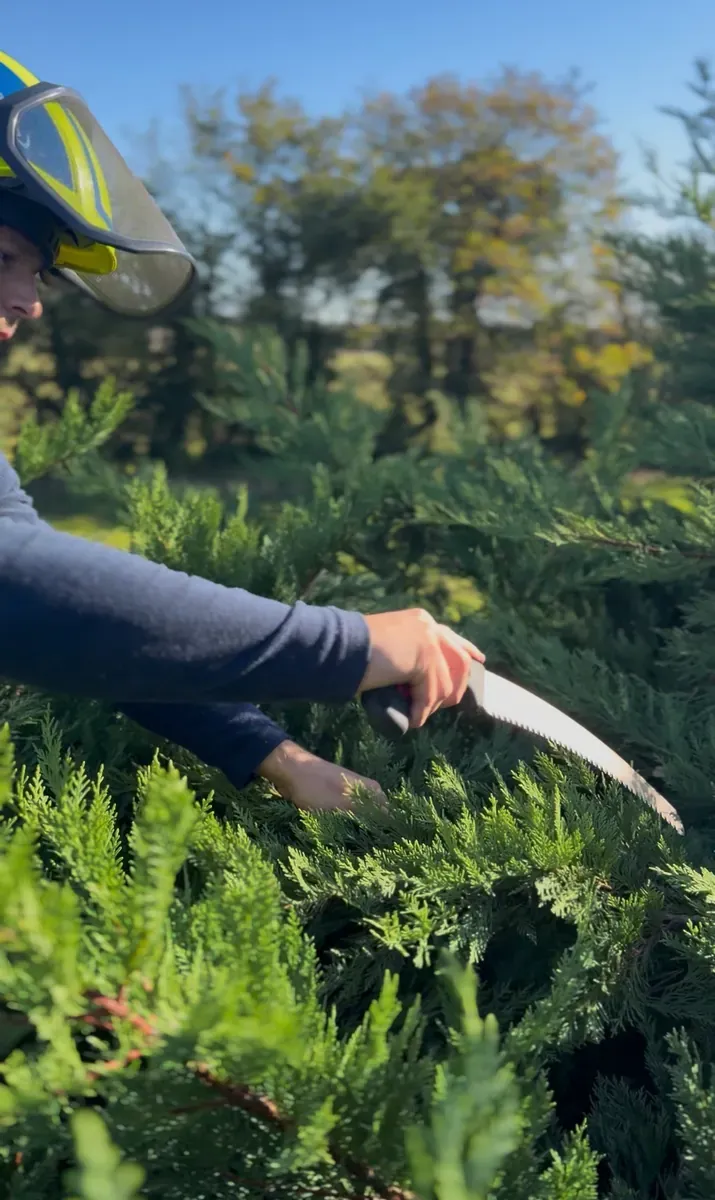
Keeping a Leylandii hedge in trim
A Leylandii hedge that is cut once or twice a year stays dense, green and manageable. The sides are trimmed back to fresh growth, the top is taken level, and the hedge is kept slightly narrower at the top than the bottom so light reaches the lower branches. Left alone for two or three seasons, the same hedge puts on a metre or more and starts to shade the garden, the neighbour's garden and itself.
Regular cutting is also the cheap option in time terms. A maintained hedge is a day's work with hand tools and a platform; a neglected one becomes a reduction project with far more waste. Our hedge cutting prices guide explains how length, height and waste shape the cost of any hedge job.
Topping Leylandii: how much can come off
Topping means taking height off the top of the hedge, and it is the job Craig is asked about most. The honest answer is that the top can usually come down by a sensible amount and green up again, because the cut ends at the top are younger wood. A reduction of a metre or two is common; taking a very tall hedge down by half in one go leaves a bare, brown top that may take seasons to fill in.
The sides are the stricter limit. Leylandii does not regrow from old brown wood, so cutting the face back past the green into the bare interior leaves permanent brown patches. Where a hedge has already grown too wide for its position, Craig will tell you plainly how far it can go back and what the result will look like. If the honest answer is that trimming will not fix it, conifer hedge removal is the page for taking the whole hedge out, and hedge reduction covers major cutting back where the hedge can recover.
Working tall hedges safely
Tall conifers are cut from platforms and steps set up on firm ground, not from ladders leant against the hedge. Sheets go down along the base to catch the clippings, which matters on Leylandii because the volume of arisings is large. Everything is loaded and taken away, and the ground is raked through before leaving.
Where a hedge borders a pavement, road or neighbour, the work is planned so nothing falls where it should not. Overhanging growth on the neighbour's side can be trimmed back to the boundary, and it is usually worth a word with them first.
High hedges and the rules
Leylandii is the hedge behind most high hedge disputes. In England, if an evergreen hedge over two metres is blocking light to a neighbour's home or garden, they can complain to the local council under the high hedges rules, and the council can order it reduced. Keeping your own hedge at a sensible height is far easier than arguing about it later.
Cutting back is also best timed outside the main bird nesting season where possible, and active nests are always left alone. Most Leylandii work happens from late summer through to spring.
How often and what it costs
Most Leylandii hedges need cutting once a year to stay smart, twice if you want them crisp all season. Little and often keeps the green face intact and the clippings manageable.
There is no fixed rate because hedges vary so much. The cost of trimming Leylandii reflects the length and height of the run, how much growth is coming off, the access along both sides, the equipment needed to reach the top safely and the amount of waste to remove. Send Craig a photo showing the full hedge with something for scale, plus your location, and he will give you a clear quotation before any work is booked.