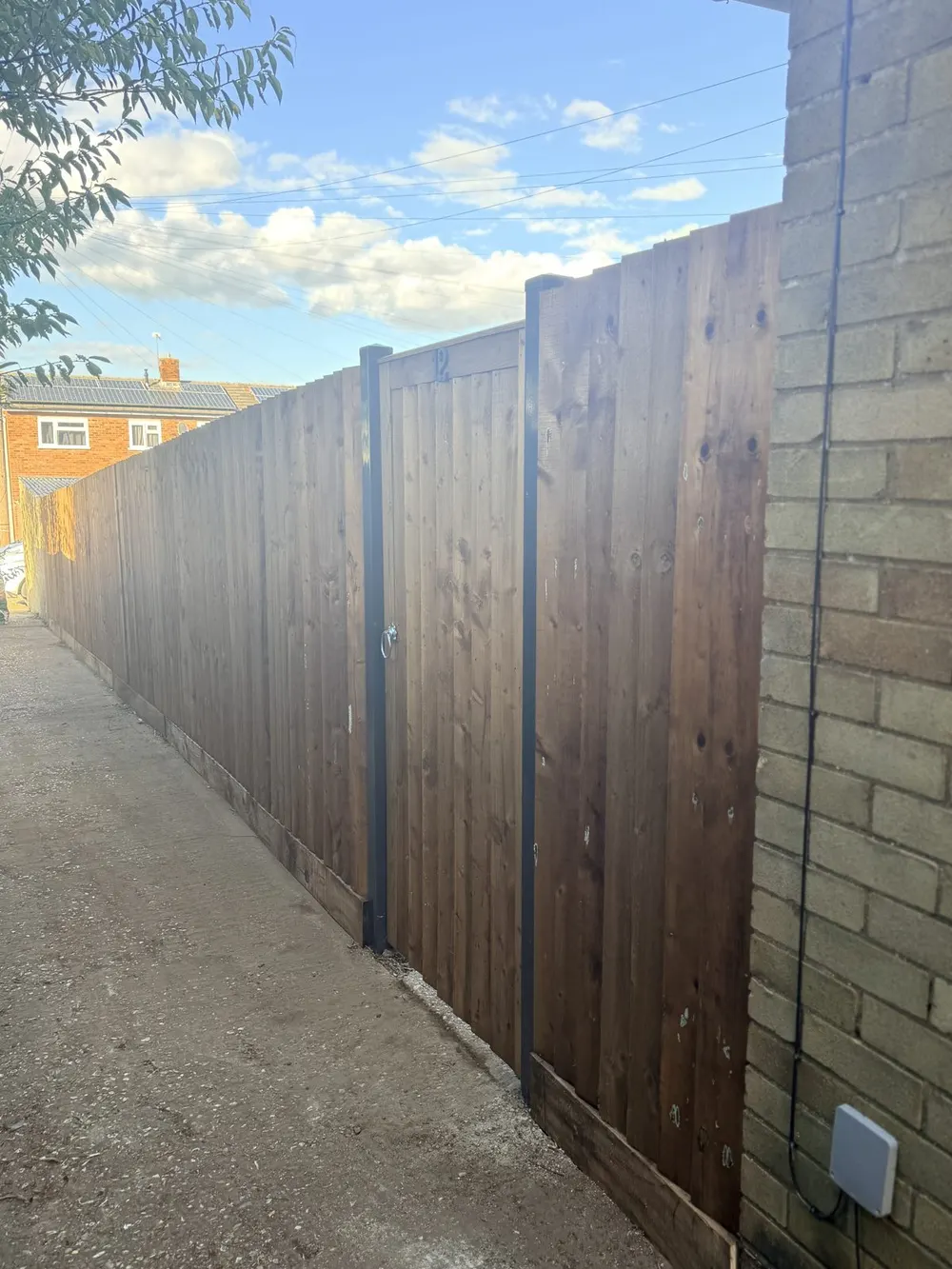
Separate the failed section from the retained run
Look along the whole fence before deciding where work should stop. Boards may appear weathered yet remain serviceable, while a tidy-looking section can conceal weakened rails or decay near the foot of a post. Identify movement, broken fixings and places where soil touches timber. These observations help frame an enquiry, but avoid pushing an unstable fence to test it. The condition of the supports determines whether selective work has a sound starting point.
For a limited problem, fence repair provides a route to discussing the affected components. Ask which posts, rails and boards would remain, and why. A repair should connect to material capable of supporting it; attaching fresh timber to a deteriorating neighbour section can simply move the weak point. Where several connected supports have failed, a longer replacement may be more practical than repeated small interventions.
Make garden divisions serve everyday use
An internal fence can separate a vegetable area, screen stored bins or distinguish a seating space from the working garden. Unlike an outside boundary, its position can often be considered alongside how people move through the plot. Sketch the routes used for watering, carrying tools and reaching a shed. Leave enough room for those movements rather than creating a narrow leftover passage that becomes difficult to maintain.
Where screening is wanted, close board fencing may provide a suitable continuous face. Consider whether full screening is necessary along the entire division or only beside the area needing privacy. The height and length influence shade as well as appearance. A shorter screen can sometimes meet the objective without dividing the garden into enclosed compartments, although the supporting arrangement still needs to suit its position.
Join old and new deliberately
A retained boundary may change direction, meet a wall or finish beside a gate. These junctions deserve attention before materials are chosen. Record the existing heights and levels, and decide whether a visible step between sections is acceptable. New timber will usually look different from weathered boards, so discuss the expected appearance rather than assuming a repair can disappear into the old fence immediately.
Connections must also respect independent structures. A neighbouring wall should not automatically become a fixing point, and a gate needs suitable support for its movement and weight. Roots, old footings and buried utilities can restrict new post locations. In a compact Bury St Edmunds garden, the route for carrying materials may be as important as the length being replaced. Explain any shared passage or access through a building.
Define the retained features in the enquiry
Before work is arranged, establish authority to alter the boundary and resolve uncertainty about its line. Check applicable planning restrictions if the height or position will change. Mark plants, paving and useful fence sections that should stay, then agree how dismantling and waste removal fit around them. See the wider fencing options, or use the Bury St Edmunds hub when other garden changes affect the sequence.
Send a marked photograph through the contact page, showing the proposed repair limits and any new garden division. Include approximate lengths, access details and the reason each section needs changing.