Read the setting as well as the damage
A fence facing open space may experience different wind loading from one sheltered by buildings. Gaps between structures and an abrupt end to a solid screen can also influence exposure. Show the surroundings in photographs, including the direction of the run and nearby openings. A close-up of broken boards alone cannot explain the conditions the complete boundary must accommodate.
Ely's wider landscape does not establish the soil beneath a particular fence. Avoid assuming every plot contains peat or needs an identical foundation detail. Previous landscaping, old post holes, rubble and local drainage can create variations along one run. Assessment should connect the proposed fence height and surface area with suitable supports and the ground actually encountered, rather than relying on a postcode-based specification.
Compare a defined repair with a defined replacement
A broken board or isolated damaged rail may allow a limited intervention if the surrounding structure remains sound. Conversely, several moving posts can make a small visible patch a poor response. Ask what has failed, what can reasonably stay and how retained components would connect to new ones. The fence repair service is the appropriate starting point for exploring that distinction.
Replacement becomes a different proposition when the current layout also causes problems. A gate may catch the ground, a low corner may leave an unwanted opening, or the fence may obstruct maintenance access. Include those issues in the comparison. Rebuilding the same line without discussing them can preserve the inconvenience even while replacing all the timber. Neither option should be chosen solely from the appearance of one damaged bay.
Specify privacy without ignoring exposure
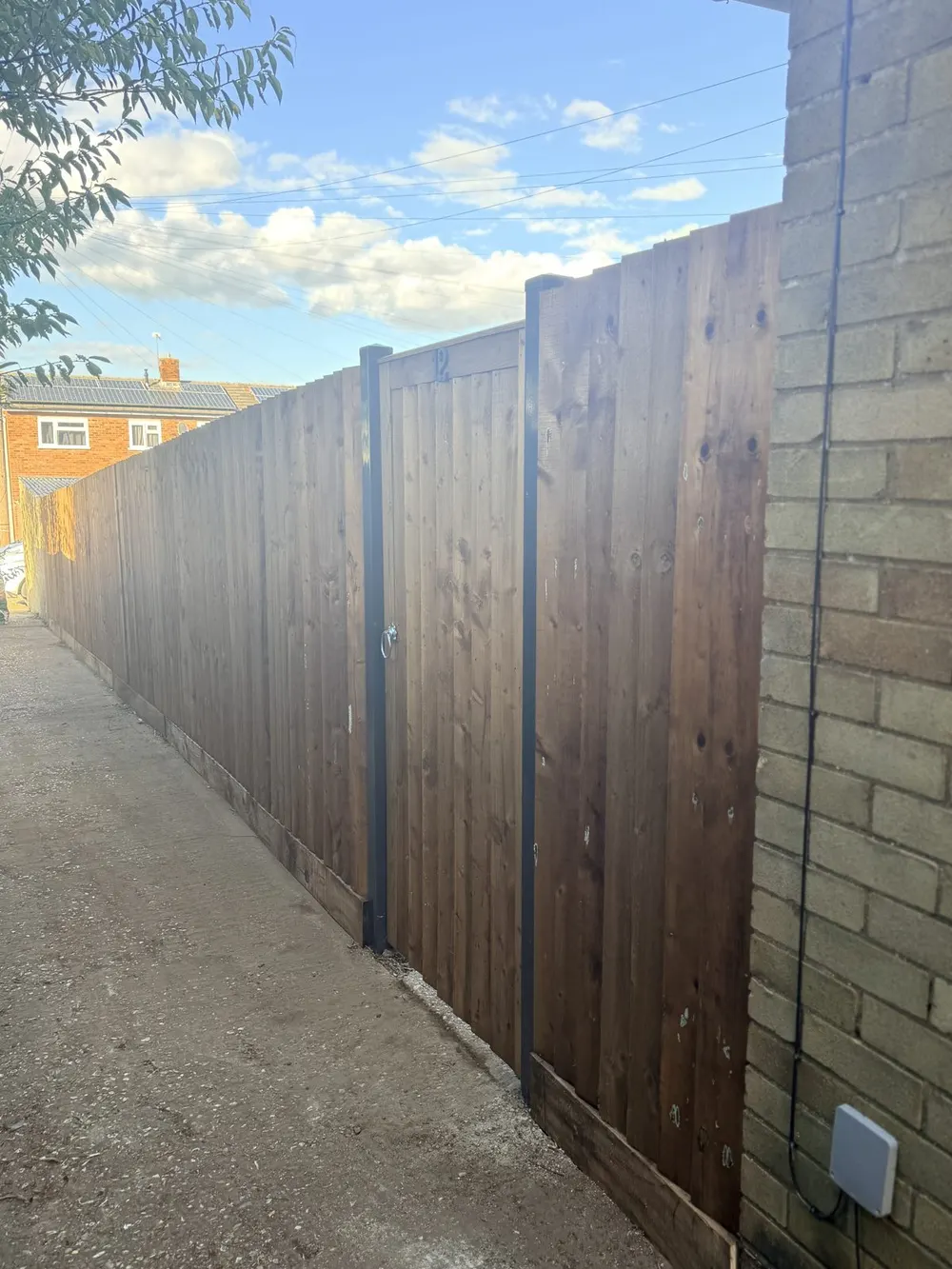
If a continuous screen remains the priority, consider close board fencing as a complete assembly rather than just a board pattern. Posts, rails, fixings and the lower edge work together. Height and spacing need to suit the setting. No choice of facing material alone removes the need to assess how the supporting structure will respond to loads.
Think about the garden beside the fence too. Raised soil should not be treated as something a standard fence automatically retains, and planned changes to beds or paving can alter the lower-edge detail. Discuss those finished levels before construction. Existing roots and utilities may constrain excavation, while old concrete can affect post positioning. An exposed outlook does not eliminate these close-range practical constraints.
Understand what changes the replacement scope
The fence replacement cost factors guide explains why access, dismantling, supports and waste handling matter alongside the visible timber. Use it to compare the contents of quotations rather than looking for a standard figure. Ask whether redundant footings are included, what happens to removed material and how unexpected obstructions would be addressed.
Check ownership and any relevant planning requirements before altering the line or height. For the broader offer, read garden fencing; the Ely hub helps coordinate related garden work. Send your postcode, overall photographs and the problems you want resolved through contact. Include access restrictions and whether you prefer to investigate repair before considering a complete replacement.