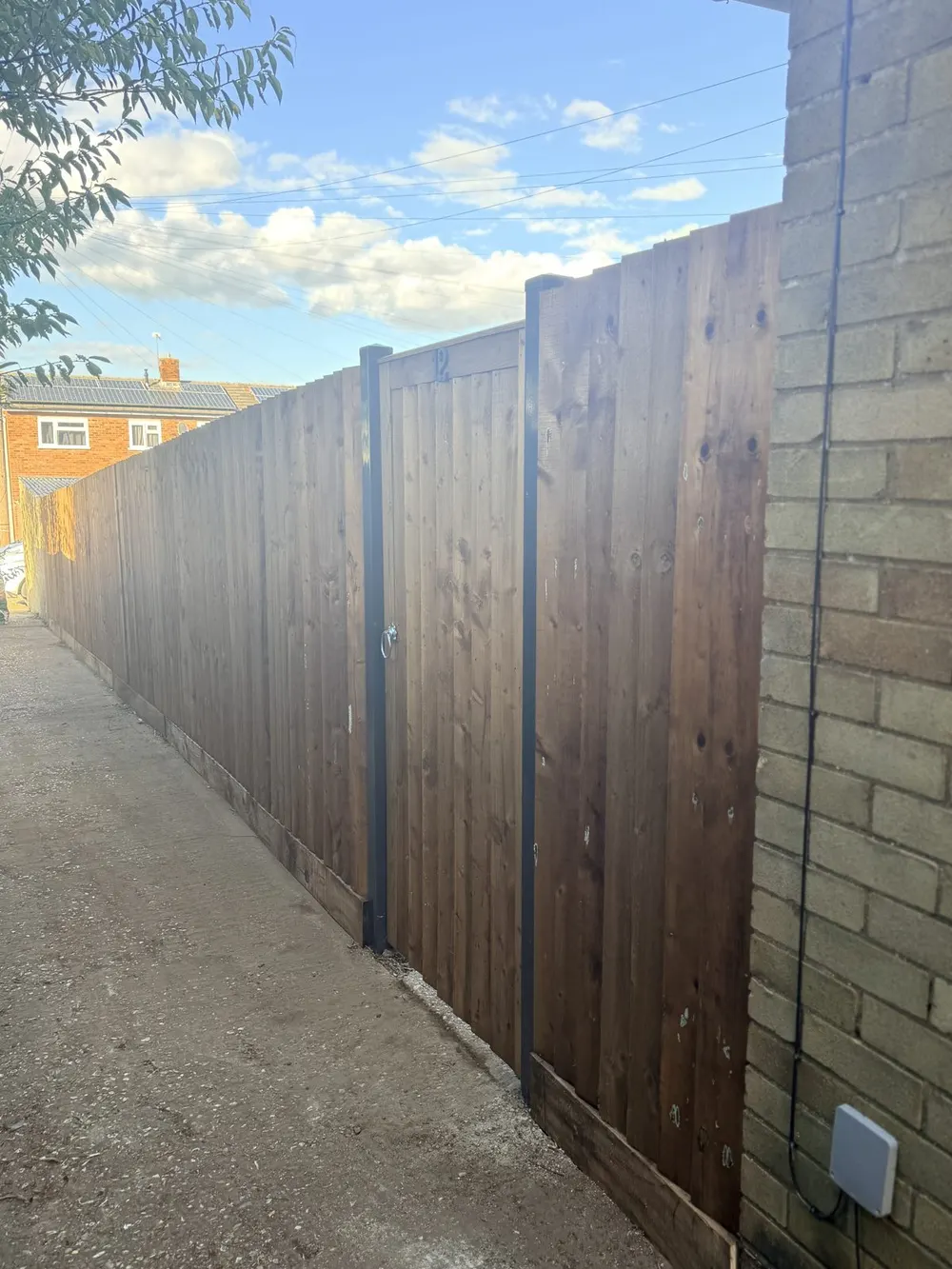
A boundary has several jobs
Privacy beside a seating area, separation along a side passage and keeping a garden entrance usable do not call for identical layouts. Start by identifying which purpose matters most. Record gates, bin routes and any space needed to maintain the house. A continuous fence that closes off practical access can be a poor result even if the timber looks consistent.
Ipswich has both older enclosed plots and newer estate gardens. A narrow route from the road can influence how long materials and removed sections are handled. Where a boundary sits close to a wall or tree, the available post positions need consideration. These are local planning questions rather than statements that Craig has installed fencing at named properties.
Clarify the line before selecting a style
Use property documents and an appropriate ownership discussion to establish the intended boundary. Existing boards, post orientation or a neighbour's memory are not definitive legal evidence. If the position is disputed, resolve it before construction rather than expecting the installer to determine ownership from the old fence.
Planning requirements can depend on height and position, particularly adjacent to a highway or at a protected building. Ground slopes also influence the visible height of successive sections. Ask about relevant restrictions before ordering a uniform run, and consider the relation to gates and neighbouring structures. General guidance cannot decide the status of the individual boundary.
Close board and panel decisions
Close board fencing uses a supporting arrangement for overlapping vertical boards. It can be considered where privacy is important, but the support design, exposure and changes in level still matter. A solid boundary presents an area to the wind; selecting thicker-looking boards alone does not establish suitable resistance.
The feather-edge versus panel guide helps distinguish construction options. Compare the complete assembly, not just the surface appearance. Posts, rails, gravel boards and fixings all influence the result. Ask how a sloping run will be arranged and where joints or gates will fall before treating two quotes as equivalent.
Repair can be narrower than replacement
Use fence repair when a damaged run needs inspection. A loose board can be a limited repair, whereas unstable posts or decayed supporting rails may make patching ineffective. Check adjoining sections rather than focusing only on the point that has visibly failed. New timber fixed to weak supports can leave the underlying problem unresolved.
The work may require removing old concrete, working around roots or avoiding buried services. Raise known drains, cables and pipe routes before excavation. Decide whether old materials will leave and how any temporary opening will be managed. Fence repair is not presented as an emergency attendance promise; availability and scope need a normal discussion.
Agree a fence people can use
The main fencing service sets out the broader offer. Send your Ipswich postcode, views along the fence and images of the entrance through the quote form. Include the desired height, the reason for the change and gates that must remain operational. A rough measurement can help frame the enquiry without replacing site checks.
Where tree work or ground changes also affect the boundary, consult the Ipswich area page. Decide the order before dismantling anything, so new supports do not obstruct the next job and retained structures are not put at avoidable risk.