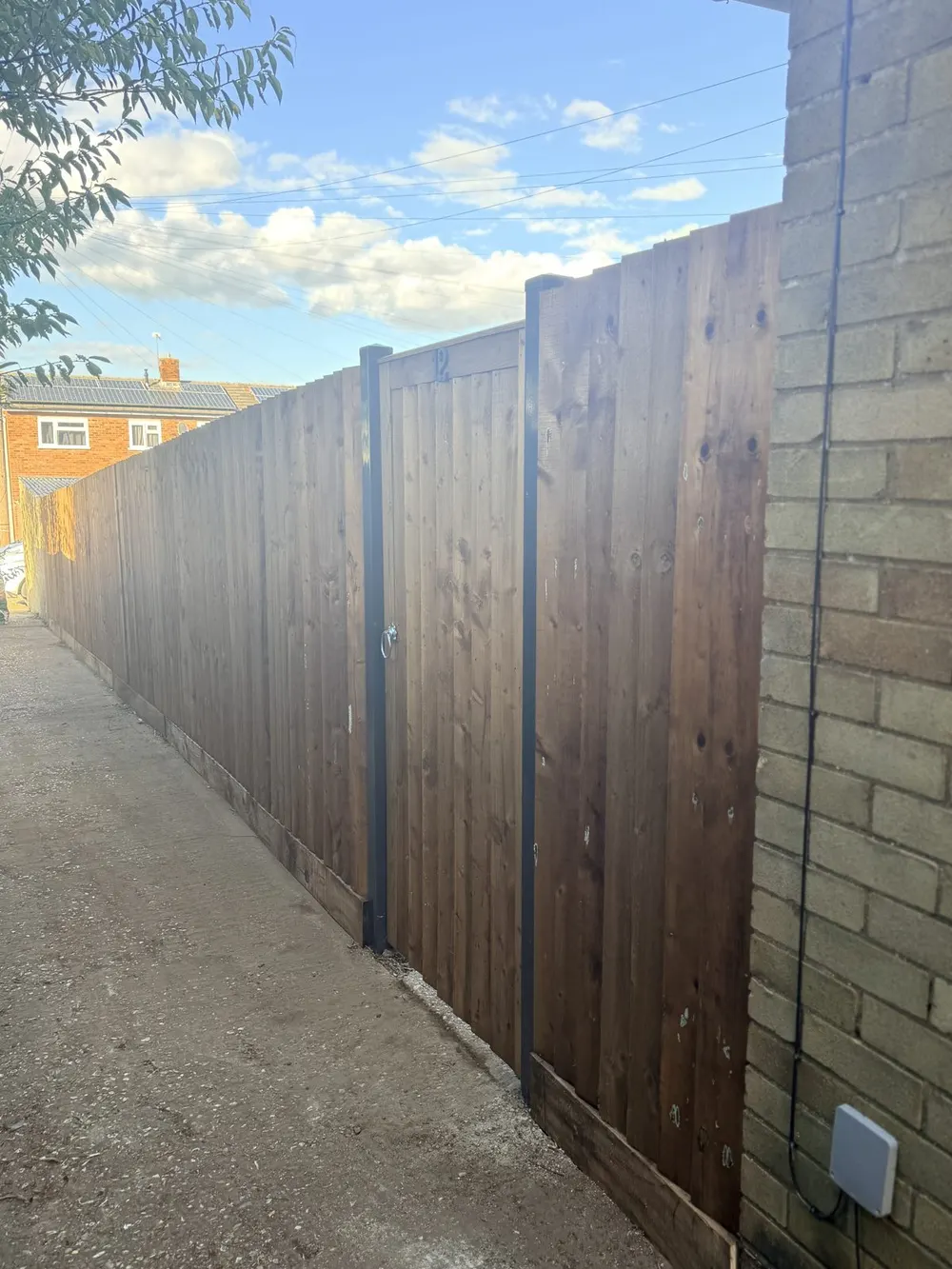
Choose screening or an open boundary
Close board fencing may be relevant where privacy is the priority. The overlapping boards work with rails, posts and the supporting arrangement; boards alone do not define the quality or suitability of the fence. Decide which sections need screening and whether a gate or change in height should break up the run.
Post and rail fencing describes an open boundary rather than a substitute for a privacy fence. It may suit a larger or more open setting where maintaining the outlook matters. Any animal containment requirement needs its own discussion about the complete design. Do not assume an open timber arrangement provides the same function as a solid garden boundary.
Posts need a site-based decision
The concrete versus timber fence posts guide compares the general options. Material choice still needs to fit height, exposure and ground. Timber condition, post size, spacing and fixings all play a role. A universal depth figure cannot establish that every supporting arrangement will perform properly.
Ground can change along a single boundary, especially around old foundations, filled trenches or retained tree roots. Mention known drains, cables and other buried supplies before excavation. Existing concrete may affect whether new posts can occupy old positions. A fence that appears level above ground can still need varied preparation below it.
Terrace access and estate layouts
In Norwich's terraced streets, a route through a side passage or shared rear entrance can affect the movement of long materials. On newer estate plots, gates and narrow strips beside the house can govern the layout. Provide photographs from both ends of the run where possible, rather than only a close-up of damaged boards.
An apparently sheltered garden may have wind funnelled between buildings. A more open plot can place different demands on a solid screen. The assessment should consider the actual exposure and proposed height, without treating every Norwich fence as identical. No promise is made that a particular material or design will prevent all future storm damage.
Boundary position and permissions
Establish the intended line from the available documents and ownership discussion before construction. Which side displays the rails is not a reliable legal test. If neighbours share maintenance or access, clarify the arrangements early so neither delivery nor the finished fence creates an unexpected obstruction.
Planning controls can depend on height, proximity to a highway and protected-building status. Retained walls or historic features may introduce further questions. Check the specific position with the relevant authority if uncertain; a general fencing page cannot determine permission for the property. Agree transitions and gate positions before treating the design as settled.
A useful fencing enquiry
The main fencing service covers installation and replacement. Send the Norwich postcode, approximate length and photographs through the quote form. Explain whether privacy, a clearer boundary or a new gate is the main reason for the work. Include removal of the old assembly and the surrounding features that should remain.
Where landscaping or trees affect the same boundary, the Norwich area page links to those separate enquiries. Plan the sequence before ordering materials. A new fence should not be installed where later excavation or branch removal will immediately interfere with it, and the scope should make responsibilities clear.