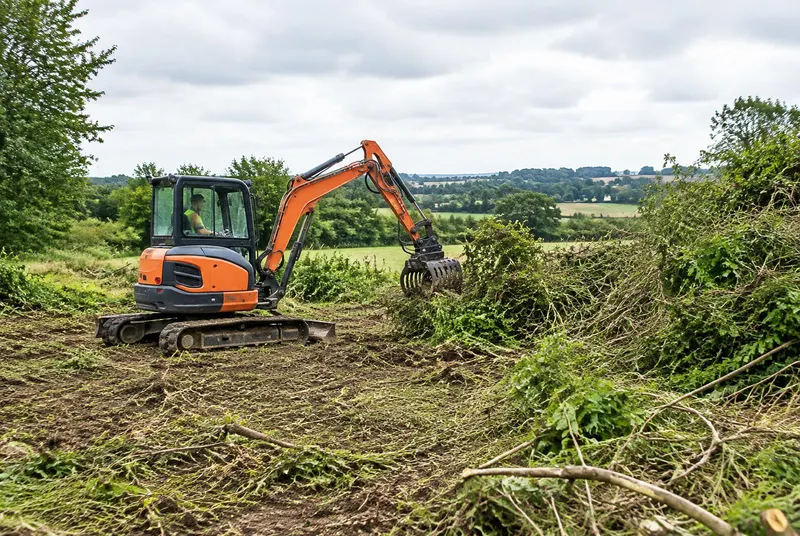
Find the retained garden beneath the growth
A neglected garden can contain sound paths, useful shrubs, service covers and boundaries hidden by vegetation. Identify those features before cutting begins. A wide photograph can help show the whole area, but make known drains, fragile structures and valued plants clear in the description. Do not enter unstable or concealed areas simply to obtain a better photo.
The garden clearance service is the main route for discussing the scope. Decide whether the goal is safe access, an empty planting area or preparation for later landscaping. Each finish involves different work. Clearing visible growth does not automatically mean levelling ground, removing every root or producing a finished lawn.
Bramble and ivy need a specific approach
Bramble and ivy removal is relevant where those plants dominate the request. Bramble growth can obscure debris or restrict access, while ivy may be attached to fences, walls or retained trees. Removing the vegetation should take account of the structure beneath it; indiscriminate pulling can expose or worsen existing damage.
Explain whether the plants are merely covering an area or supporting a boundary that already appears weak. Removing growth is not a promise that it will never return. Subsequent management may be needed, and wall or fence repairs belong in a separate scope. Wildlife features and active nests must also be considered before cutting or disturbance.
Separate vegetation from other material
A plot may contain cuttings alongside timber, discarded objects and mixed waste. Describe the different materials honestly rather than referring to every pile as garden waste. Photos help frame the discussion but cannot establish everything concealed beneath growth. Unexpected hazardous material needs appropriate advice and should not be treated as ordinary vegetation clearance.
For material already cut and collected, garden waste removal may be the relevant enquiry, with the actual collection and disposal arrangements confirmed for the job. No waste-carrier licence claim is introduced here. Clarify which material is included and whether any needs a separate specialist route before agreeing the finished condition.
Norwich site access affects the method
A terraced garden reached through a narrow shared passage has different handling constraints from an open plot with a wide entrance. Stairs, changes in level and unloading restrictions can influence the work. Include the full route to the street, not only the overgrown area. Neighbour access cannot be assumed just because it would shorten the journey.
Larger site-clearance enquiries need their own discussion about access and retained features. If ground preparation or machinery is being considered, describe the purpose and known buried services. A garden clearance request should not silently expand into an unrestricted land operation. Agree the area, method and handover finish before using the broad word site as the entire specification.
Plan what follows the clearance
The garden clearance cost guide explains factors such as density, access and material handling without supplying invented prices. Comparable quotes need a comparable finish. State removal, retained features and any separate follow-on tasks so a lower-looking scope is not mistaken for the same work.
For upkeep afterwards, gardening in Norwich addresses maintenance rather than another reset; recurring visits from Brandon need case-by-case agreement. Send the postcode, safe wide photographs and priorities through the quote form. The Norwich hub provides links to landscaping and fencing if the cleared garden needs a further defined project.