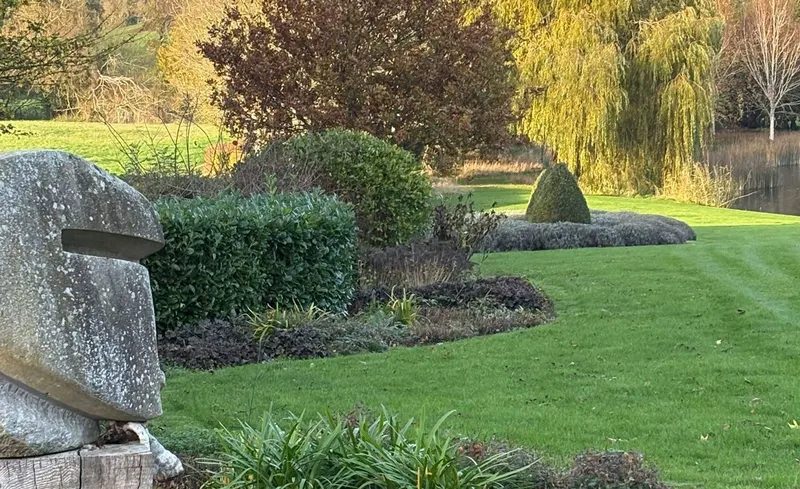
Separate the garden from the wider grounds
Start with a simple account of the space: lawn beside the house, beds near the entrance, grass around outbuildings and any paddock beyond. The boundaries between them matter. A short finish where children play serves a different purpose from managing taller grass on open land, even when the two areas share a gate.
Newmarket's equestrian setting makes this distinction particularly useful, but a town address does not automatically mean a property includes stables or grazing. Describe what is actually there. For an ordinary residential garden, the relevant work may be mowing, edging, weeding and seasonal tidying, without any need for larger land management.
Domestic grass cutting with a considered finish
Use grass cutting for lawns and garden grass where the aim is a maintained domestic finish. Include the shape of the area as well as its approximate size. A broad lawn, a series of small patches and grass threaded around planted beds can involve quite different handling.
Mark the edges that need attention and mention furniture, play equipment or low branches that interrupt the mowing route. If you have left some grass longer intentionally, explain where that area begins. Lawn care in this enquiry is mowing and edging, not lawn treatments; the important decision is which areas should be cut and how the finished garden should function.
Paddock mowing needs its own conversation
For grazing areas, fields and larger plots, paddock mowing covers ride-on mowing and topping rather than a close garden cut. Send an approximate area, the current height of growth and its intended use. Mention rough ground, hidden objects and restricted entrances before assuming equipment can reach every section.
Where animals use the land, arrangements for moving them and securing gates need agreement with the owner. Ground conditions also affect when mowing is sensible: soft ground may not carry machinery without damage. A domestic gardening visit should not be taken as an agreement to cut an adjoining paddock, so include both requirements explicitly if you want them considered.
Give beds and seasonal tasks a place in the plan
Grass can dominate the view while smaller jobs accumulate nearby. Weeds at the front entrance, leaves around a seating area or growth spilling from a border may need attention just as much. The garden maintenance service brings those household garden tasks into the discussion alongside mowing.
Make room for what should remain, too. Label plants you are keeping and describe any parts of the garden you prefer to manage yourself. An ongoing arrangement can then focus on the help you need, with frequency and seasonal priorities agreed for the property rather than copied from a standard calendar.
Show the route as well as the work
A few photographs of gates, turns and the route past buildings can explain access better than a close-up of the grass. If a garden and paddock have separate entrances, show both. Note any shared access or movements around a yard that would need coordination.
The Newmarket area page brings together other local service enquiries. To discuss gardening, contact Craig with your postcode, photographs and a short description of each area. State whether you need a single visit or want to explore ongoing care.