Make a retention plan before a removal list
Walk around the garden and identify the elements worth keeping: a comfortable seating position, useful planting, a sound path or a lawn with a workable shape. Record their condition rather than assuming everything old needs replacing. Photographs taken from the house and the far boundary help show how these retained pieces relate to one another.
Bury St Edmunds includes walled town gardens where established features and restricted entrances can influence refurbishment. A wall or narrow passage may limit material handling even when the working area is generous. The Bury St Edmunds area page provides the wider local context; the actual access and ground still need checking.
Choose phases that leave useful stopping points
A sensible first phase resolves anything that would otherwise disturb later work. That might mean agreeing surface levels, identifying drainage routes or deciding where an edge will sit. Avoid finishing a new lawn across the only route needed to bring materials into a later phase. Temporary access should be part of the discussion, not an afterthought.
Each stage should also leave the garden reasonably usable. Define where unfinished ground begins, how the house remains accessible and which areas stay untouched. The main landscaping service helps frame a combined project, while a written phase list separates the current agreement from possible future changes.
Join new lawn and gravel to retained features
Where a worn lawn section needs replacement, turf installation should account for the adjoining grass and existing edges. Discuss whether a partial renewal will create an awkward join or whether reshaping a larger section makes maintenance easier. Preparation and establishment watering remain important even when only one part of the garden changes.
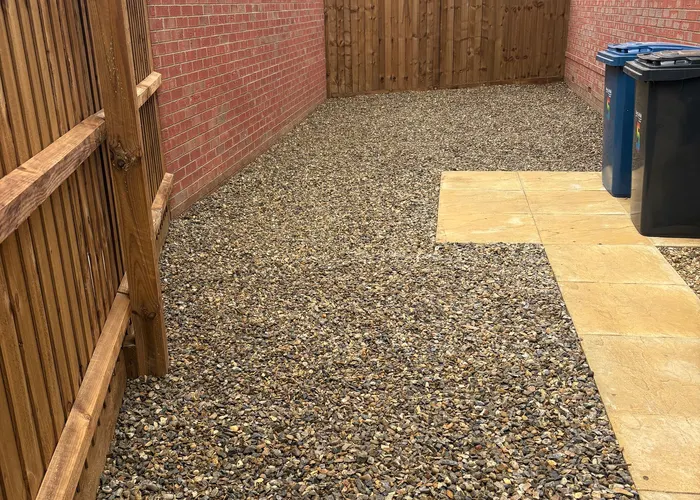
Gravel installation can introduce a defined route or refresh a separate garden area. Consider containment beside retained beds and whether the chosen surface suits everyday walking. Existing paths are not automatically suitable foundations. Their condition, proposed loading and relationship with nearby ground need assessment before a new finish is specified.
Treat hard landscaping as connected construction
Hard landscaping decisions include support beneath surfaces, restrained edges and junctions with buildings. Altering one level can affect several retained features. Keep inspection covers accessible and consider buried services before excavation. The town's setting cannot establish an individual plot's soil or drainage, so neither preparation nor water management should rely on a general local assumption.
If the refurbishment includes a proposed patio, use the patio installation information to prepare questions about materials, falls and thresholds. Ask Craig to confirm whether that service and scope are suitable for your project before including it in the agreed phases. This is a proposed-service discussion, not a claim about completed patio work.
Record the handover for every stage
Specify what stays protected, what is removed and how each new surface meets the retained garden. Include spoil handling and any temporary arrangements between phases. The landscaping cost guide explains why access, preparation and scope matter when comparing proposals.
Send a marked photograph or simple sketch through the contact form, with your postcode and preferred first stage. Distinguish essential work from later possibilities, and identify anything that must remain usable throughout.