Connect the house to the outdoor space
An Ipswich garden can be a long rear plot behind an older house, a compact estate garden or a larger space with several entrances. The route from the kitchen, where bins are stored and how tools reach the far end affect the plan. Mark those everyday movements before deciding which area should become lawn or gravel. An attractive arrangement that blocks essential access is not a useful finish.
The landscaping service is the main starting point for discussing several changes as one project. Explain which existing features you value and what currently fails. A retained tree, a service cover or a neighbour's boundary can shape the layout more than a preferred material. A broad photograph helps reveal those relationships better than a close-up of one surface.
Prepare for lawn rather than hide old problems
For turf installation, consider the levels, soil condition and the surface left beneath the new rolls. Compacted ground, buried debris and poor drainage cannot reliably be dealt with by laying grass over them. The proposed lawn needs a suitable prepared bed and a realistic arrangement for watering during establishment.
Decide whether the lawn should extend right to a fence or leave space for a manageable border. Awkward narrow strips can create unnecessary mowing work. Where the garden is shaded or heavily used, discuss the intended use honestly rather than expecting a new lawn to perform identically in every position. Turf laying is distinct from lawn treatments, which Craig does not offer.
Gravel works as a designed surface
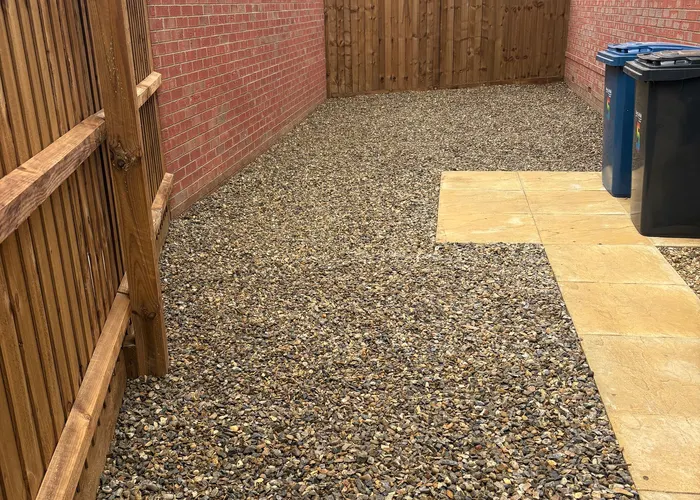
Gravel installation can be considered for paths, drives or defined garden areas. The intended load changes the preparation: walking access and vehicle use are not interchangeable specifications. Retention at the edge, underlying construction and relationships with drains and adjacent ground should be settled before choosing the visible stone.
Runoff must not simply be directed towards a doorway or neighbouring property. Existing levels, thresholds and service covers need checking. Ask how the new surface will meet retained paths and how it will be kept in place during normal use. Do not assume gravel alone will correct every drainage problem or that all apparently similar aggregates create the same walking surface.
Planted beds belong to a maintenance plan
For planting, the discussion concerns beds, borders and planting areas, not tree or hedge planting. Describe the light, available room and how much ongoing care you want to undertake. Plants should be chosen for the position and the expected maintenance, rather than only for how they look on the installation day.
Keep useful existing plants where they support the plan. Access for weeding and watering can be built into the arrangement without turning every border into a narrow leftover space. If clearance comes first, identify retained growth before it begins. Tree and hedge planting are not offered, and should not be assumed to form part of this landscaping enquiry.
Agree scope before comparing quotations
The landscaping cost guide explains drivers such as preparation, access and materials without inventing prices. Record removal, supplied materials, construction and the handover finish separately so two quotes can be compared on equivalent work. A change to one level can affect neighbouring surfaces, making a combined assessment worthwhile.
Send your postcode, garden photographs and priorities through the quote form. Include the narrowest entrance and any fixed features that must stay. The Ipswich hub links to separate tree, fencing and gardening enquiries if those decisions need to be resolved before the wider garden project.