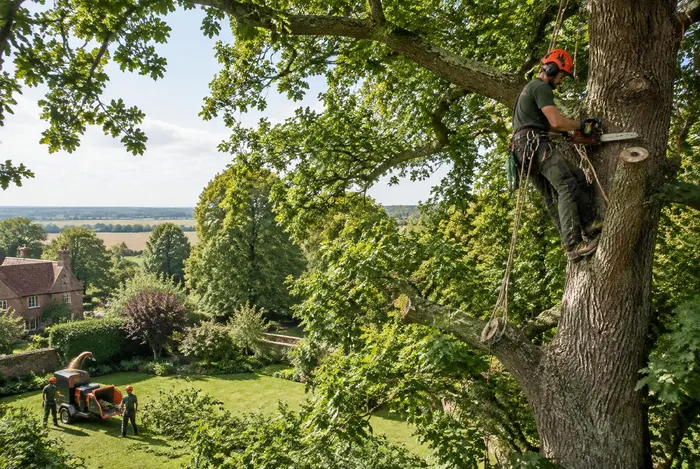
Use the building relationship to frame the request
In a tightly arranged garden, the distance between branches and structures can matter more than overall tree height. Describe whether growth touches a roof, blocks a passage or hangs over an area used daily. A crown that looks imposing from the street may be compatible with the garden; another tree can cause a practical conflict despite being relatively small.
Older Ipswich properties may have walled plots or access through the house-side passage, while later developments can place retained trees near new extensions and fences. These are possible arrangements, not claims about completed work. Photograph the tree from several positions and show outbuildings, parked vehicles and overhead services before proposing a cut.
Retention requires more than shortening branches
The tree surgery service is the main entry point for the assessment. If the tree is to remain, species, condition and previous pruning affect what is sensible. Removing every branch that appears inconvenient can undermine the shape or leave too little useful growth. A clear objective helps avoid treating heavy cutting as a universal answer.
Crown reduction and lifting describe different operations. Reduction addresses parts of the spread and dimensions; lifting concerns clearance below the crown. Neither should be selected simply because the names sound similar. Explain the route or structure that needs room, the tree features you want to retain and how the proposed work would serve that purpose.
Removal is a separate decision and specification
Where retaining a tree is not appropriate, tree removal needs a scope suited to the surroundings. A confined site can rule out treating the work as one open-ground felling operation. Access for branches and timber, protection of retained features and the working area should be considered together before a method is agreed.
Removal can also change privacy, shelter and the use of the garden. Discuss those consequences before assuming the absence of the tree is the only desired result. The stump is another item: felling does not automatically mean excavation or grinding is included. Record what should happen to timber and whether further ground work is planned later.
Check the legal position before a booking
The Tree Preservation Orders guide explains the general checks for protected trees and conservation areas. Confirm the actual position with the planning authority before work. A previous permission for a different tree, or a neighbour's approval, does not establish consent for the proposed operation. Keep relevant documents available when discussing the job.
Active bird nests and possible bat features also need consideration. If signs suggest further advice is needed, do not treat a preferred date as overriding wildlife obligations. This page offers general planning information, not a legal determination or a specialist report. An apparent defect should be described accurately rather than used to assume all checks can be bypassed.
Make the assessment useful
Through the quote form, provide the postcode, wide photographs and the reason for the request. Say when a concern first appeared and whether building or ground work has changed the surroundings. Include the narrowest entrance and any shared access. Photos assist the first conversation, but cannot prove internal condition or replace an assessment where one is needed.
Use the Ipswich area hub for the broader garden services after the tree decision. Separating a defined tree operation from lawn, boundary or clearance work makes it clearer which elements are being assessed and what the finished site should include.