Different plots, different constraints
Stowmarket's older streets and established residential areas include gardens where trees share limited space with houses, outbuildings and neighbouring boundaries. A long rear plot may still have a narrow entrance. Before deciding the work, establish how branches and timber could leave without relying on access through somebody else's land.
The town's expansion brings another set of questions. A newer house may stand beside retained mature trees, or a garden tree may now be close to an extension, shed or fence. Neither the age of the house nor its postcode establishes the ground conditions, root spread or suitability of a particular operation. Those need to be assessed at the property.
The River Gipping is context, not a diagnosis
The River Gipping is an important part of Stowmarket's setting, but proximity to the river does not explain the condition of an individual garden tree. Drainage, previous ground disturbance, available rooting space and changes around the trunk can all matter. Avoid assuming that every nearby plot is wet, has the same soil or needs the same response.
Useful information includes recent building work, changes in ground level, visible damage and when a concern first appeared. A leaning tree, sparse canopy or dead branch needs interpretation in context. Photographs can help frame an enquiry, but they cannot establish internal condition or provide a reliable diagnosis on their own.
Describe the objective before choosing a cut
For access beneath branches, crown lifting may be relevant. Where the overall spread is the issue, a carefully specified reduction may be considered instead. Removing selected dead branches addresses a different concern again. The tree surgery service provides the wider starting point for discussing these options.
Heavy cutting is not a shortcut to a permanently smaller, trouble-free tree. Species, condition and previous pruning affect the response, and some requests would leave a poor structure or too little healthy growth. Explain whether the priority is a usable path, clearance from a roof or retaining a valued tree with manageable dimensions. That gives the assessment a practical purpose.
Check protection and wildlife before scheduling
Tree Preservation Orders and conservation area controls should be checked before work proceeds. Depending on the tree and location, permission or advance notice may be necessary. Ask the local planning authority where the position is unclear, rather than assuming a garden tree is unrestricted because it belongs to the property.
Active bird nests are protected, and potential bat roost features may require specialist advice. Timing should follow the tree's needs, legal constraints and site conditions, not a blanket rule that every operation belongs in one season. If an apparent hazard is involved, keep people away from the affected area while seeking appropriate advice.
Access, arisings and the next stage
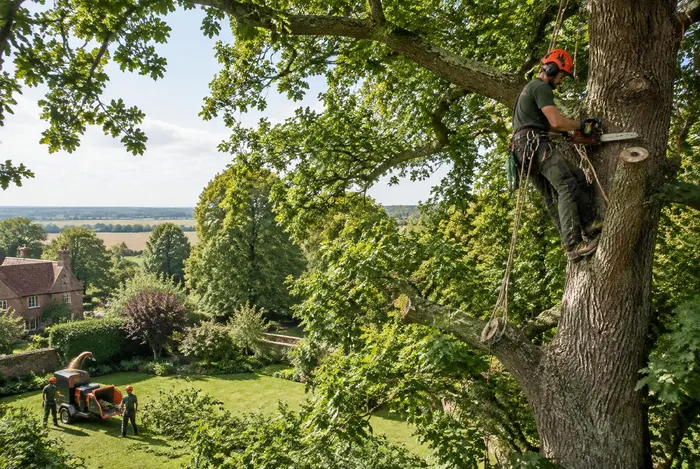
A useful specification records the tree, the intended operation and what happens to the resulting material. Clarify whether timber remains, whether branches are removed and whether a stump is outside the scope. Gates, steps, parked vehicles and overhead services should be raised early because they can affect the working arrangements.
If keeping the tree is no longer appropriate, tree removal needs a defined scope. After felling, stump removal is a separate discussion about access, buried services and the intended use of the opening.
Tree work may also change the balance of the garden. More open space can expose a previously sheltered boundary, while removing screening can affect privacy. Consider those consequences before agreeing removal. For wider local garden planning, return to the Stowmarket town page.